The logistics of children's activities in the city can feel isolating. You drop off at one location, pick up at another, and rarely see the same faces twice. Between coordinating schedules and navigating different neighborhoods, you're managing your kids' social lives while your own network stays frustratingly small.
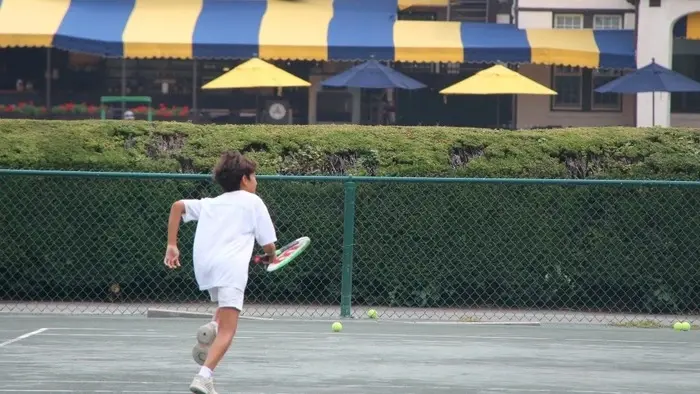
For parents navigating life in New York City, these connections matter. The junior tennis courts at The West Side Tennis Club have become an unexpected gathering place where parents that were once strangers on the sidelines are now friends who genuinely show up for each other.
Where Community Forms While You Wait
At The West Side Tennis Club, more than 400 kids move through the junior programs each week. That means hundreds of parents find themselves in the same place, at the same time, week after week.
What starts as polite small talk during the first lesson becomes something more substantial by the third week. You learn that the mom next to you lives just three blocks away on your street. By week four, you're comparing notes on the best pediatrician in Forest Hills because her son just had strep throat and you went through the same thing last month.
Another parent mentions working in marketing at a startup in Manhattan, and suddenly you're exchanging thoughts on the commute from Austin Street. Someone else asks if anyone knows a good math tutor for middle schoolers. You do, and you text them the contact right there.
These aren't forced networking events or contrived meet-and-greets. The connections happen naturally because you're all in the same situation, watching your kids progress through a structured ROGY pathway (for ages 3-17) while you figure out the next hour.
Carpools to Coffee Dates
Small acts of help mean the world to someone.
You need someone to grab your daughter from tennis because a work meeting ran late. Another family is heading to the club and offers to take your son along. After a few weeks, those carpool chats turn into coffee invitations every Tuesday.
Before you know it, you start texting about life outside of Tournament Training schedules like weekend plans or restaurant recommendations, the kind of casual friendship that makes city life feel less anonymous.
Some parents have found business partnerships through these connections. Others have built genuine friendships that extend well beyond the courts. The common thread is that they just happened. The junior program simply created the conditions for real relationships to begin.
The Value of Seeing Familiar Faces
Consistency matters when you're trying to build community.
The junior tennis program runs year-round, which means you're not starting over every season with a new group of parents. You see the same families week after week, and that repetition makes it easier to move past surface-level conversations.
Parents often plan their schedules so their kids are in the same sessions. Not just for the children's friendships, although those matter too. The parents want to make sure they'll have someone to talk to during the lesson. Someone who gets the challenges of raising kids in Queens and understands why finding activities that don't have an hour of subway travel feels like a win.
The club's location in Forest Hills means many families live within walking distance or a short drive. You're building relationships with people who live in your neighborhood and shop at the same stores.
These are your neighbors.
Building Something That Lasts
Years from now, your kids might not remember every tennis drill. But you'll remember the parents who became friends. The ones who celebrated your job promotion. Whose kids grew up alongside yours.
The junior tennis program gives you the framework, but the friendships become something bigger. You create a support system that makes navigating parenthood in the city more manageable because they're living it too.
The same logistical challenges that once felt overwhelming like coordinating pickups or finding last-minute help because of competing schedules. They become easier when you have a network of parents you trust.
Some families join The West Side Tennis Club specifically for tennis. Others join for the pool, the space, or the summer programming. But almost everyone stays for the community they didn't expect to find. The parents who started as strangers but became the people you text first when you need help.
That network matters. It changes how you experience your neighborhood and how you think about raising your family in New York City. It all starts with showing up on Tuesday afternoons and standing on the sidelines, striking up a conversation with the parent next to you.